
 Svenska
Cart
Your cart is empty, but doesn't have to be..
Your cart is empty, but doesn't have to be..
This guide explains how to use the ProAir Biathlon PCP Pump 4500 safely and correctly. It covers connection, pressure-gauge readings, filling procedures and why the high-pressure hose must always be depressurised before the filling probe is removed.
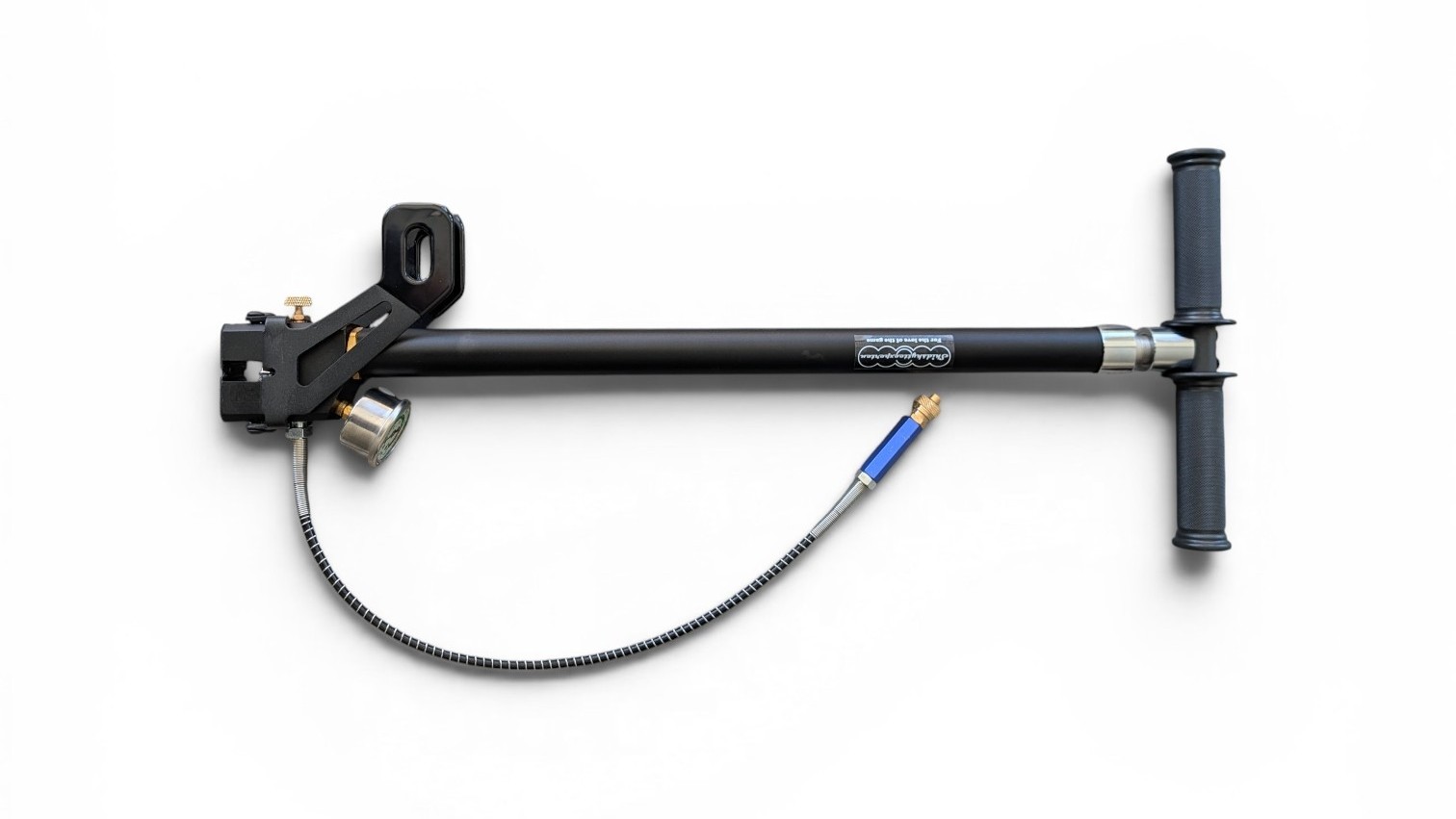
The pump is supplied with a Forster coupling on the high-pressure hose. The filling probe required for the air rifle or air cylinder must be purchased separately.
Always make sure that the filling probe is compatible with both the pump coupling and the filling port on the rifle or air cylinder.
A PCP hand pump is used to fill the air cylinder of a pre-charged pneumatic air rifle. PCP stands for Pre-Charged Pneumatic.
The pump compresses air through repeated strokes. The pressure rises gradually in the high-pressure hose and air cylinder. Pumping resistance therefore increases as the pressure rises.
A hand pump is a portable alternative to a compressor or an external compressed-air cylinder. It can be used at home or at the shooting range, provided that the correct connection is used and the manufacturer's pressure limits are followed.
A pump rating of up to 4500 PSI does not mean that every air cylinder may be filled to this pressure.
Always follow the maximum filling pressure stated on the air cylinder, rifle or in the manufacturer's documentation. Never exceed this limit.
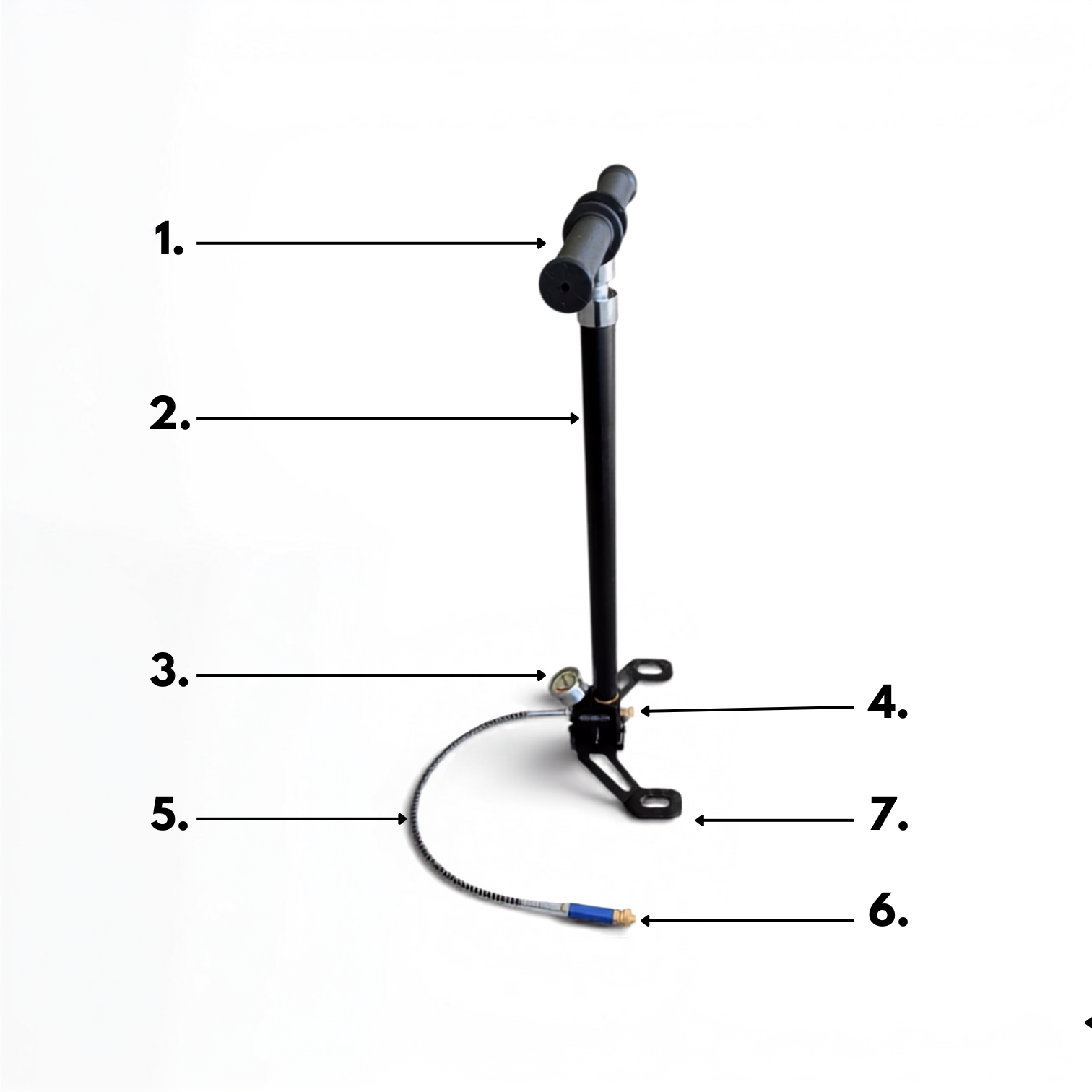
It is important to distinguish between the pump coupling, the filling probe and the filling port on the rifle.


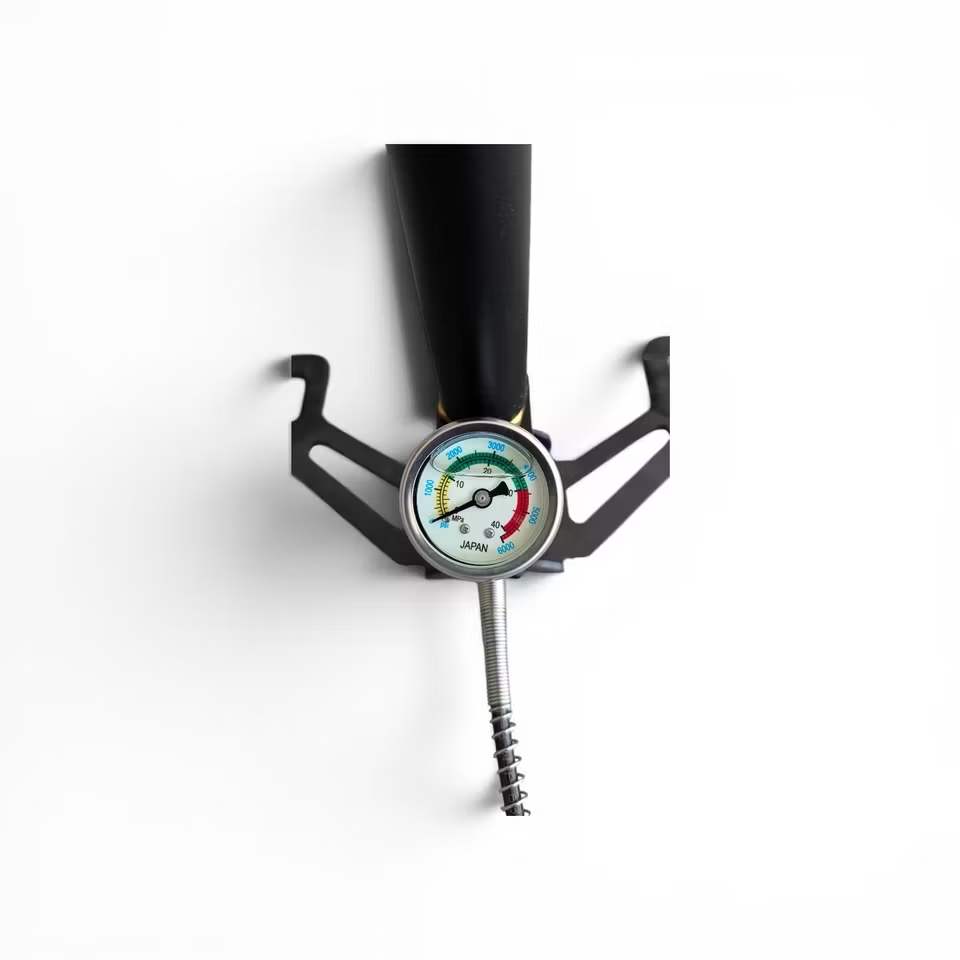
The pump pressure gauge is marked in PSI and MPa. Many air rifles and air cylinders, however, specify the filling pressure in bar.
You may therefore need to convert the stated pressure before you begin pumping.
| Bar | MPa | Approximate PSI |
|---|---|---|
| 50 bar | 5 MPa | 725 PSI |
| 100 bar | 10 MPa | 1450 PSI |
| 150 bar | 15 MPa | 2176 PSI |
| 180 bar | 18 MPa | 2611 PSI |
| 200 bar | 20 MPa | 2901 PSI |
| 210 bar | 21 MPa | 3046 PSI |
| 230 bar | 23 MPa | 3336 PSI |
| 250 bar | 25 MPa | 3626 PSI |
| 300 bar | 30 MPa | 4351 PSI |
| 310 bar | 31 MPa | 4496 PSI |
For an FX Airguns Biathlon air rifle with a stated maximum filling pressure of 210 bar, the maximum pressure is equivalent to:
Stop pumping when the gauge reaches 21 MPa or approximately 3050 PSI. Do not fill the air cylinder above 210 bar.
The example above only applies to a cylinder or model that is actually marked for a maximum filling pressure of 210 bar.
Other rifles and air cylinders may have different pressure limits. Always check the marking and the manufacturer's instructions before filling.
Do not use the pump if the hose, pressure gauge, coupling or any other high-pressure component is damaged, loose or deformed.
Stop using the pump if you notice an abnormal leak or if the pressure gauge does not operate as expected.
Read the marking on the air cylinder or consult the rifle manufacturer's instructions. Decide before pumping at which gauge reading you must stop.
Use a filling probe that is compatible with both the rifle's filling port and the pump's Forster coupling. The filling probe must be purchased separately.
Make sure both O-rings are intact, clean and correctly positioned. Do not use the filling probe if an O-ring is missing, cracked or deformed.
Connect the filling probe to the coupling on the high-pressure hose. Make sure the coupling has locked and that the probe is securely connected.
Insert the filling probe straight into the filling port on the rifle or air cylinder. Avoid twisting or angling the probe, as this may damage the O-rings.
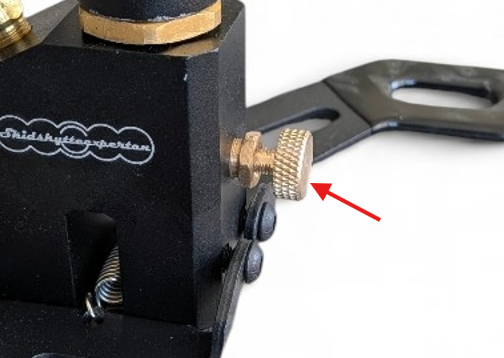
Close the bleed screw gently by hand so that the system can build pressure. Do not overtighten it.
Use long, smooth strokes and the pump's full stroke length. Pumping resistance will increase as the pressure rises.
Read the correct scale throughout the filling process. Stop pumping when the permitted filling pressure has been reached.
Slowly open the bleed screw when filling is complete. A hissing sound will be heard as pressure is released from the high-pressure hose.
Wait until the hissing sound has stopped and the pressure gauge has returned towards zero. Do not remove the filling probe until the high-pressure hose has been depressurised.
Pull the filling probe straight out of the filling port. The probe can then be disconnected from the Forster coupling if required.
After the air cylinder has been filled, compressed air remains inside the pump's high-pressure hose.
If the filling probe is pulled from the filling port while the hose is still pressurised, the probe's O-rings are forced firmly against the inside and edge of the filling port.
Pulling the probe out under pressure can cut, deform or prematurely wear the O-rings. Damaged O-rings may cause leakage during the next filling operation.
Always open the bleed screw and wait until all pressure has been released before removing the filling probe.
Pumping becomes more difficult as the pressure in the air cylinder rises. Controlled movement makes the process easier and reduces unnecessary strain on both the user and the pump.

A clean and properly maintained pump is easier to inspect and less likely to develop problems caused by dirt, moisture or damaged seals.
Do not perform advanced disassembly or internal repairs without verified instructions for the specific pump model.
Only use lubricants and replacement parts suitable for the pump's materials, seals and high-pressure system.

| Problem | Possible cause | Safe check |
|---|---|---|
| The pump does not build pressure | The bleed screw may be open or one of the connections may be leaking. | Check the bleed screw, hose, Forster coupling, filling probe and O-rings. |
| Air leaks at the filling port | The probe may be incorrectly positioned or an O-ring may be damaged. | Stop pumping, depressurise the hose and inspect the probe and both O-rings. |
| The probe is difficult to remove | Pressure probably remains in the high-pressure hose. | Open the bleed screw and wait until the hissing sound has stopped. |
| The probe is loose in the coupling | The coupling may not have locked correctly or the probe may be incompatible. | Stop using the pump and check compatibility. Do not pump unless the connection is secure. |
| Pumping becomes progressively harder | The pressure inside the air cylinder is increasing. | This is normal within the permitted pressure range. Continue slowly and monitor the pressure gauge. |
| The pressure gauge shows nothing or appears incorrect | The system may be leaking or the gauge may be damaged. | Stop using the pump. Inspect visible connections and do not continue if the gauge operation is uncertain. |
| The O-rings are frequently damaged | The probe may be removed under pressure, inserted at an angle or be the wrong size. | Always depressurise before removal. Check probe compatibility and insert it straight. |
Do not continue pumping if the hose is damaged, the coupling is loose, the pressure gauge is faulty, there is a major leak or the high-pressure system is not operating normally.
Contact Skidskytteexperten or a qualified technician before using the pump again.
No. The filling probe must be purchased separately and selected according to the rifle or air cylinder being filled.
The high-pressure hose is fitted with a Forster coupling for connecting a compatible filling probe.
210 bar equals 21 MPa and approximately 3046 PSI. On the pump pressure gauge, this can therefore be read as 21 MPa or approximately 3050 PSI.
An FX Airguns Biathlon marked with a maximum filling pressure of 210 bar must not be filled above 210 bar. This equals 21 MPa or approximately 3046 PSI. Always check the marking on the actual air cylinder.
Yes. Open the bleed screw and wait until the hose is fully depressurised before removing the filling probe.
The hissing sound is compressed air being released from the high-pressure hose when the bleed screw is opened.
The O-rings can be damaged if the probe is removed while the system is pressurised, if the probe is inserted at an angle or if an incorrect connector is used.
The pump requires a filling probe that is compatible with both the Forster coupling and the filling port on the rifle. The rifle's permitted filling pressure must also be observed.
No. 4500 PSI equals approximately 310 bar or 31 MPa.
Stop pumping and depressurise the system. Inspect the visible connections, filling probe and O-rings. Do not use the pump if the cause is unclear or if any high-pressure component is damaged.
The ProAir Biathlon PCP Pump 4500 is a manual high-pressure pump for filling compatible PCP air rifles and air cylinders. The high-pressure hose is fitted with a Forster coupling.
The filling probe is not included and must be purchased separately. It must be compatible with both the pump coupling and the filling port on the rifle.
The pump pressure gauge is marked in PSI and MPa. A pressure of 210 bar equals 21 MPa or approximately 3046 PSI.
The most important procedure after filling is to open the bleed screw and fully depressurise the high-pressure hose before the filling probe is removed. This protects the O-rings and reduces the risk of leakage.