
 Svenska
Cart
Your cart is empty, but doesn't have to be..
Your cart is empty, but doesn't have to be..
Skidskytteexperten |5/07, 2026
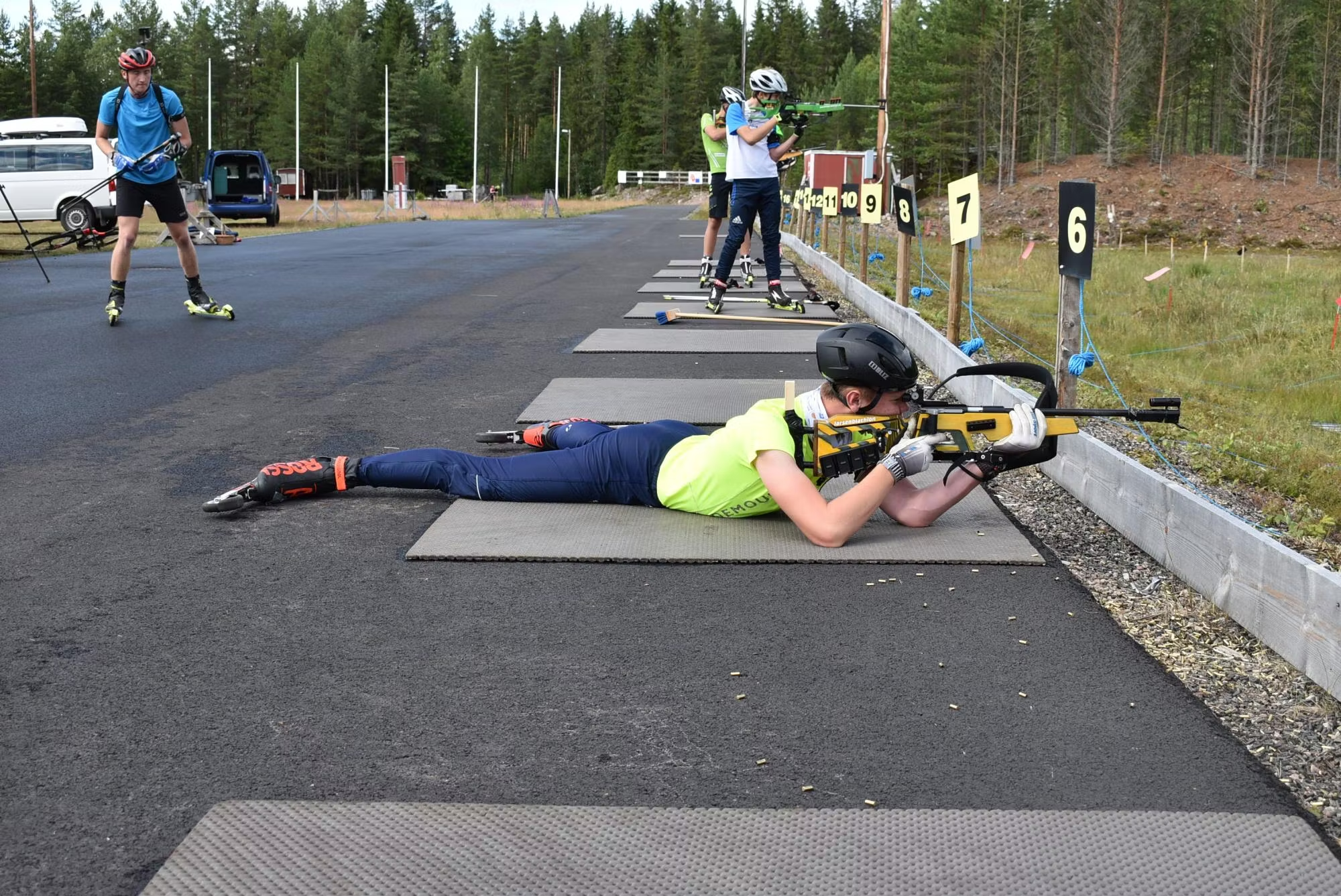
Many athletes believe that real progress happens when the snow arrives and the competition season begins. In reality, however, the foundation for success is built during the summer. For older youth athletes and juniors, it is often the small, consistent habits during the off-season that make the biggest difference once winter returns.
Here are seven areas well worth focusing on.
Strength is about much more than skiing faster. A strong body gives you better rifle control, improved skiing technique and helps reduce the risk of injuries throughout the season.
Focus especially on your legs, core, back and hips. Your strength training doesn't need to be complicated. Squats, lunges, deadlifts, pull-ups, push-ups and core exercises provide an excellent foundation. Prioritize good technique over heavy weights. A stable and well-balanced body allows you to maintain high-quality training and perform consistently throughout the season.
Aerobic endurance is the engine of biathlon. The better your endurance base becomes during the summer, the greater your capacity to train, recover and perform when winter arrives.
That doesn't mean every session needs to be long or exhausting. In fact, easy endurance sessions are often the most valuable. Running, cycling or roller skiing at a comfortable pace builds the aerobic capacity you'll rely on all season long. Consistency over many weeks is far more important than occasional hard workouts.
Not every shot contributes equally to your development. Before each shooting session, decide exactly what you want to improve. Is it your trigger control, rifle position, relaxation, follow-through or shot process?
Don't be afraid to shoot fewer series with greater focus instead of firing hundreds of shots without a clear objective. Keeping a simple training diary can also help you identify patterns and track your progress over time.
Dry firing is one of the most effective ways to improve your shooting—and it's completely free.
Just a few focused minutes several times a week can make a remarkable difference. Practice mounting the rifle, finding your natural point of aim, controlling the trigger and maintaining a stable sight picture throughout the shot. Short, concentrated sessions are usually far more productive than long sessions where focus begins to fade.
Always make absolutely sure your rifle is unloaded and follow all safety procedures, even during dry-fire practice.
```html
Being efficient doesn't mean shooting quickly. It means performing every movement smoothly, consistently and without unnecessary actions.
Practice your entire routine: approaching the shooting lane, getting into position, loading calmly and beginning your shooting with confidence. After your final shot, work on getting up efficiently, securing your rifle and leaving the mat with good flow.
When these movements become automatic, you'll save both time and energy while staying calm and focused for the shots that really matter.
Technique is never "finished." Small improvements during the summer often translate into significant gains once you're back on snow.
Film your roller skiing or running technique whenever possible and compare it to previous recordings. Ask your coach or an experienced athlete for feedback. Focus on balance, weight transfer, pole timing and rhythm. Rather than trying to change everything at once, work on one or two technical details until they become natural.
It's easy to focus entirely on training while forgetting that your body only improves when it has time to recover.
Good mobility in your hips, ankles, shoulders and upper back helps you achieve both an efficient skiing technique and a stable shooting position. Equally important are sleep, proper nutrition and planned recovery. Athletes who know when to rest often perform better over the long term than those who constantly push themselves.
It's easy to think that success is created during the competition season. In reality, much of your development takes place long before the first snowfall. Summer offers a fantastic opportunity to build strength, endurance, technique and good habits without the pressure that often comes with winter racing.
You don't have to do everything perfectly. Small improvements, repeated consistently over time, often produce the greatest results. When the season begins, you'll benefit from every thoughtful training session you've invested in throughout the summer.
And remember—you don't have to make the journey alone. If you're wondering whether your equipment fits properly, need advice on choosing the right gear or simply have questions about your biathlon equipment, you're always welcome to get in touch. I'd be happy to help, whether you're just starting your biathlon journey or aiming for the next level.
Good luck with your summer training—we'll see you on the shooting range!